
MOT failures and advisories explained
What the result on your MOT means, what you can do after a fail, and which advisories are worth fixing now. Figures from 33,210,951 DVSA tests in 2025; rules from GOV.UK.
The short answer
- A car fails with any dangerous or major defect. Minor defects and advisories are recorded, but on their own they do not fail it.
- In 2025, 72.3% of cars passed first time, 22.4% failed and 5.3% passed after a repair during the test.
- With a dangerous defect you must not drive the car until it is repaired. Otherwise you can drive it away only while the old MOT is still valid.
- Advisories matter: cars with some of the common ones were well over the average 28.8% chance of not passing their next test first time.
The 2025 MOT in numbers
- Tests counted
- 33,210,951DVSA anonymised MOT data, 2025
- Passed first time
- 72.3%DVSA anonymised MOT data, 2025
- Failed
- 22.4%DVSA anonymised MOT data, 2025
- Passed after a repair during the test
- 5.3%DVSA anonymised MOT data, 2025
- Tests with at least one dangerous defect
- 7.3%DVSA anonymised MOT data, 2025
- Most a test centre can charge for a car
- £54.85GOV.UK, MOT costs, checked 31 October 2026
What each result means
The tester records every problem in one of four groups. Two of them fail the car.
| Result | Does it fail? | What it means | What to do |
|---|---|---|---|
| Dangerous | Yes | A direct risk to road safety or the environment. | Do not drive it until it is repaired. |
| Major | Yes | Affects safety or the environment, or breaks a legal requirement. | Repair it and have the car retested. |
| Minor | No | A fault with no significant effect on safety or the environment. | Fix it soon. It is on the record. |
| Advisory | No | Something to monitor, such as tyres or brake pads wearing towards the limit. | Plan the work before the next test. |
Every result goes on the MOT database, and you can see it with the MOT history service. A car that fails and is repaired during the same visit counts in our figures as not passing first time.
Failed your MOT? Can you drive it?
Did the test list a dangerous problem?
YesDo not drive it until it is repaired. Driving with a dangerous defect can mean a fine of up to £2,500, a driving ban and 3 penalty points.NoGo to the next questionIs your current MOT still valid?
YesYou can drive it away for repair. It must still be roadworthy at all times.NoYou can only drive it to have the failed items fixed, or to an MOT test booked in advance. It must still be roadworthy.
Retests: when they are free
| What you do | Retest | Cost |
|---|---|---|
| Leave the car at the test centre for repair, retested within 10 working days | Partial | Free |
| Take it away and bring it back to the same centre by the end of the next working day, for certain items | Partial | Free |
| Take it away and bring it back within 10 working days | Partial | A partial retest fee may be charged |
| Anything else | Full | The full MOT fee again |
The next-working-day items include lamps (not headlamp aim), mirrors, wipers and washers, the horn, seats and seatbelts, registration plates, wheels and tyres, doors and the battery. GOV.UK has the full list.
What cars fail on
The most common failure areas in 2025 were lamps, reflectors and electrical equipment, suspension, tyres. Many of these are cheap to put right before the test.
| Item | Value |
|---|---|
| Lamps, reflectors and electrical equipment | 38.2% |
| Suspension | 32.4% |
| Tyres | 22.5% |
| Brakes | 22.4% |
| Visibility | 15.6% |
| Body, chassis, structure | 11.8% |
| Noise, emissions and leaks | 11.2% |
| Steering | 7.1% |
| Seat belts and supplementary restraint systems | 3.5% |
Source: DVSA, tests in 2025, published 22 June 2026.
| Item | Share |
|---|---|
| Tread depth: tread depth below requirements of 1.6mm | 2.2% |
| Brake pads: less than 1.5 mm thick | 1.8% |
| Condition: has ply or cords exposed | 1.3% |
| Condition: has a tear, caused by separation or partial failure of its structure | 0.6% |
| Condition: has a bulge, caused by separation or partial failure of its structure | 0.4% |
| Service brake (roller test): efficiency less than 50% of the required value | 0.3% |
Share of all cars tested. Source: DVSA, tests in 2025, published 22 June 2026.
Do advisories lead to failures?
We followed 28,838,361 cars from their last MOT in 2024 to their first in 2025. Overall, 28.8% did not pass the second test first time. Cars with the advisories below did worse than all matched cars of the same ages.
The biggest jump was for “stop lamp: non-obligatory stop lamp not working”: 49.4% of those cars did not pass next time, against 35.9% for cars of the same ages.
| Advisory | Cars | Did not pass next time | Same-age cars |
|---|---|---|---|
| Stop lamp: non-obligatory stop lamp not working | 90,888 | 49.4% | 35.9% |
| Track rod end: ball joint has slight play | 276,037 | 47.8% | 35.5% |
| Component mounting prescribed areas: prescribed area is corroded but not considered excessive | 153,421 | 52.4% | 40.6% |
| Exhaust system: has a minor leak of exhaust gases | 507,248 | 48.4% | 37.4% |
| Condition: webbing slightly damaged or frayed | 97,499 | 44.9% | 33.9% |
| Service brake performance: fluctuating, but not excessively | 189,954 | 43.7% | 32.8% |
| Play in steering rack inner joint(s) | 358,164 | 47.6% | 36.9% |
| Exhaust system: mounting defective | 217,760 | 46.8% | 36.1% |
| Individual direction indicators: slightly discoloured | 217,572 | 48.2% | 37.7% |
| Ball joint: ball joint has slight play | 468,233 | 45.3% | 35.3% |
| Service brake performance: binding but not excessively | 476,398 | 45.6% | 35.6% |
| Integral vehicle structure condition: is corroded but structural rigidity is not significantly reduced | 93,940 | 50.3% | 40.5% |
From the 40 most common advisories. "Same-age cars" is the rate for all matched cars of the same ages. Source: DVSA, tests in 2025, published 22 June 2026.
| Advisory | Cars | Did not pass next time |
|---|---|---|
| Tread depth: worn close to legal limit/worn on edge | 5,035,960 | 35.8% |
| Condition: slightly damaged/cracking or perishing | 2,548,986 | 33.3% |
| Brake discs: worn, pitted or scored, but not seriously weakened | 2,473,073 | 37.1% |
| Brake pads: wearing thin | 2,207,877 | 34.1% |
| Pins and bushes: pin or bush worn but not resulting in excessive movement | 1,600,901 | 41.7% |
| Engine oil leaks: leak, but not excessive | 1,135,392 | 46.1% |
| Rigid brake pipes: corroded, covered in grease or other material | 985,099 | 46.6% |
| Coil spring: corroded | 832,794 | 45.2% |
| Shock absorbers: has light misting of oil | 807,703 | 37.8% |
| Brake discs: worn, but not excessively | 680,217 | 34.7% |
Source: DVSA, tests in 2025, published 22 June 2026.
Before your MOT
You can book the test up to a month, minus a day, before the current MOT runs out and keep the same renewal date. Use that month to check the basics.
Ten minutes on the drive
- Every light: headlights, sidelights, brake lights, indicators, rear fog light and number plate lamp
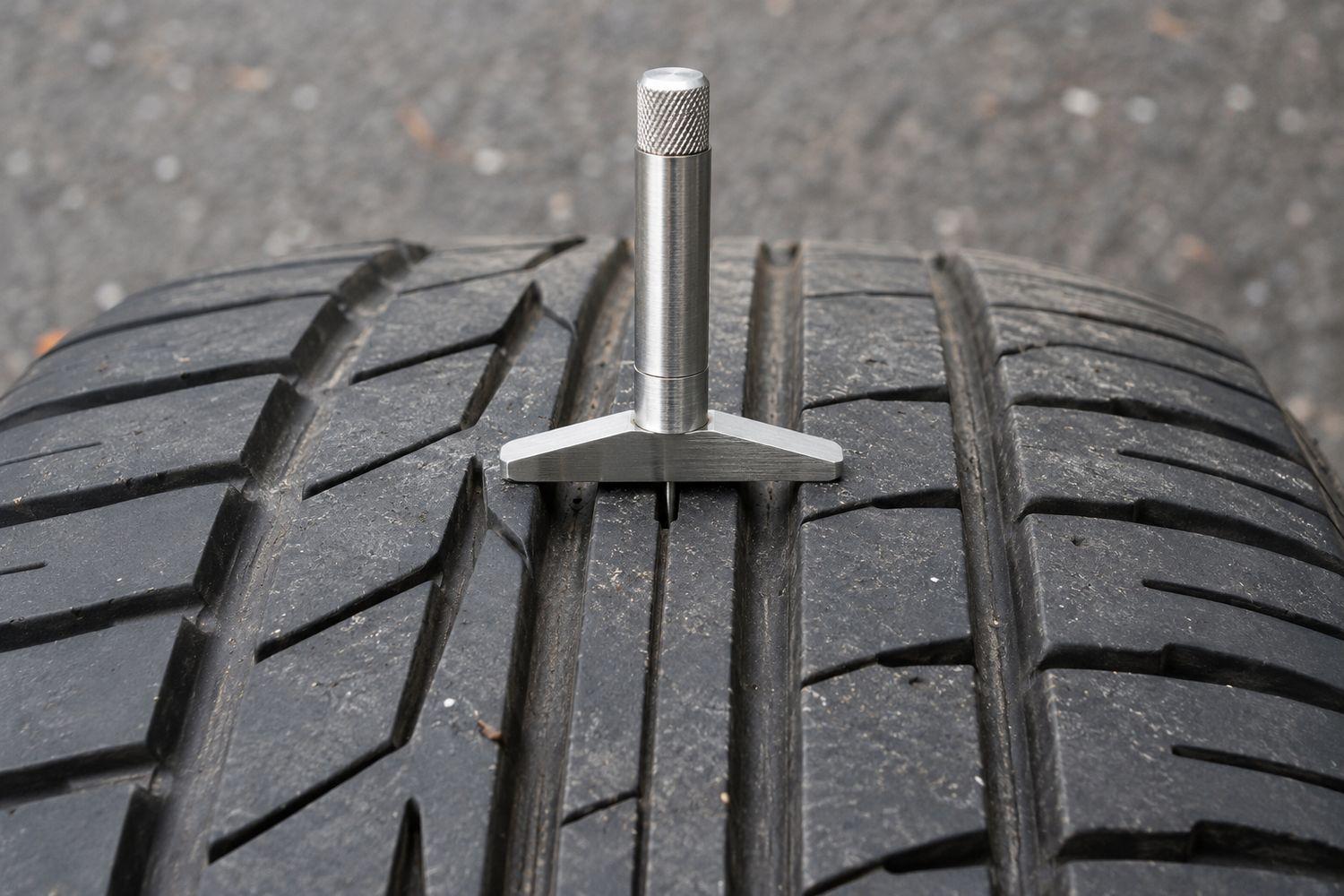
- Tyre tread (1.6 mm across the middle three quarters is the legal minimum), pressures, cuts and bulges
- Screen wash topped up and wiper blades not split
- Horn working and number plates clean and readable
Before you book
- Read last year's advisories and get them looked at
- Check the common faults for your model in the make and model figures
- Clear the boot and cabin so the tester can reach seatbelts and seats
- Note when your current MOT runs out
Questions people ask
What fails an MOT?
Any dangerous or major defect. Minor defects and advisories are recorded on the result, but on their own they do not fail the car.
Can I drive my car after it fails its MOT?
Not if the test found a dangerous problem: it must be repaired first. Otherwise you can drive it away while your current MOT is still valid. If the MOT has run out, you can only drive it to have the faults fixed or to an MOT test booked in advance. In every case it must stay roadworthy.
What is an MOT advisory?
A note from the tester about something to monitor or fix soon, such as tyres or brake pads wearing towards the limit. It does not fail the car, but cars with some common advisories are much more likely to fail their next test.
Is an MOT retest free?
It is free if you leave the car at the test centre for repair and it is retested within 10 working days, or if you take it back to the same centre by the end of the next working day for certain items such as lamps, mirrors or tyres. Bringing it back within 10 working days can mean a partial retest fee. Otherwise the full fee applies.
How much does an MOT cost?
Test centres set their own price up to a legal maximum. The most they can charge for a car is £54.85. There is no VAT on the fee.
How early can I get an MOT?
Up to a month, minus a day, before the current one runs out, and you keep the same renewal date. Test earlier than that and the renewal date moves to a year (minus a day) from the new pass.
What happens if I drive with a dangerous defect?
You can be fined up to £2,500, banned from driving and given 3 penalty points.
Sources
Checked against these on 31 October 2026. If the rules change, the source is the final word.
- Getting an MOT: MOT test result GOV.UK, DVSA
- Getting an MOT: retest after a repair GOV.UK, DVSA
- Getting an MOT: MOT costs GOV.UK, DVSA
- Getting an MOT: when to get an MOT GOV.UK, DVSA
- DVSA anonymised MOT testing data, tests from 1 january to 31 december 2025 Driver and Vehicle Standards Agency
Checking one car?
These figures describe groups of cars. A vehicle history report shows the full MOT history, mileage, outstanding finance, write-offs and stolen records for one registration.
Figures from the DVSA anonymised MOT testing data for MOT tests in 2025, published by the Driver and Vehicle Standards Agency. Analysis by Motoring Insider. Contains public sector information licensed under the Open Government Licence v3.0. How we work out these figures.
Every dataset we use is listed on our data sources page, with the credit lines on our attribution page.